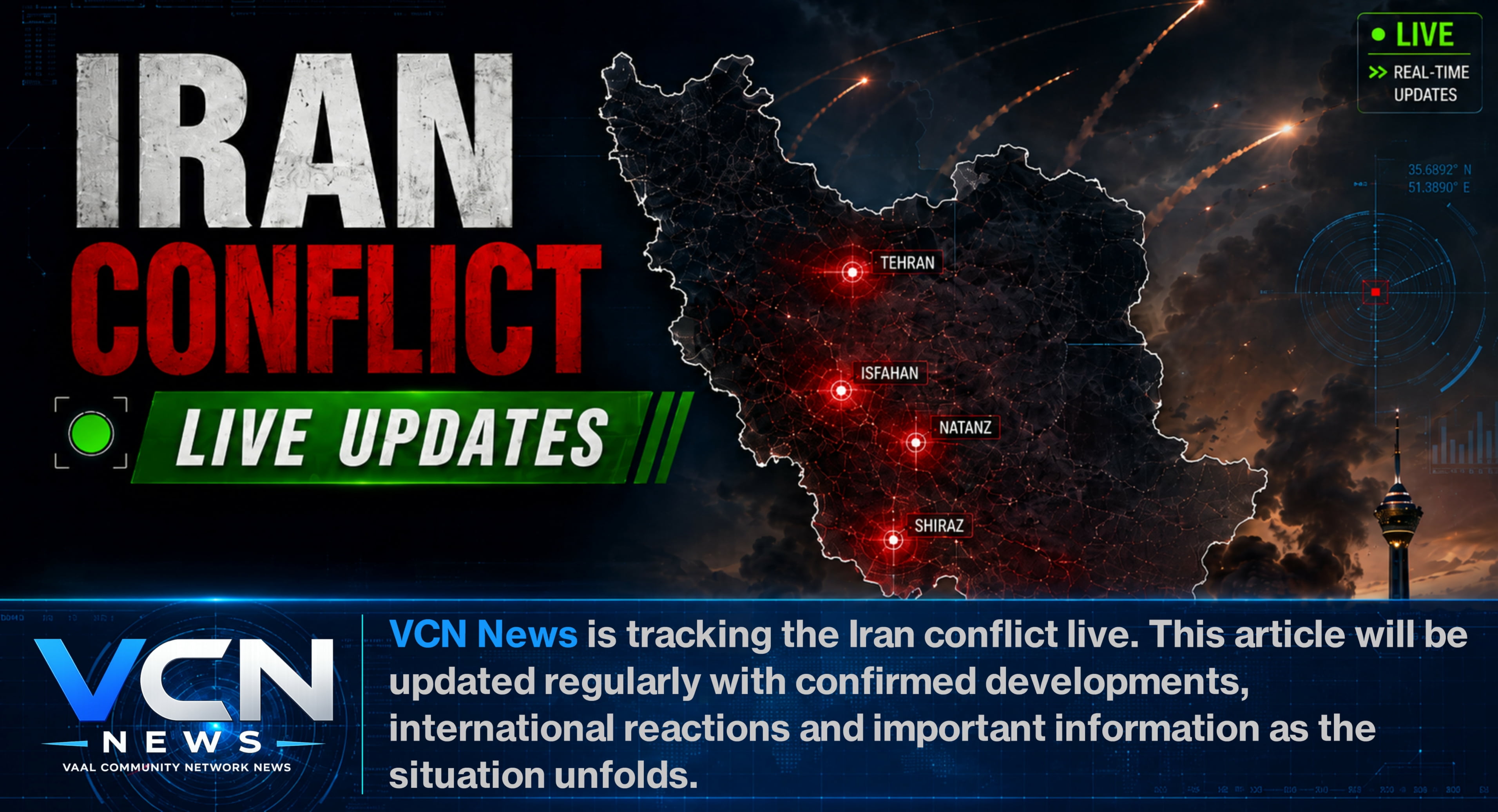





































IRAN WAR UPDATE: The Complete Timeline and Where the Conflict Stands Now
Last Updated: Monday, 3 August 2026 at 19:21 SAST
The Iran war has entered another uncertain military pause, but there is still no formal ceasefire or confirmed peace process.
The restraint seen between 24 and 26 July did not last. Iranian-
By the weekend of 1–2 August, the United States was preparing another major attack against Iranian energy infrastructure. President Donald Trump later cancelled the operation, saying regional governments had requested more time to reach an agreement concerning the Strait of Hormuz and Iran’s nuclear programme.
Iran, however, denied that direct negotiations with the United States were taking place.
No Confirmed Ceasefire or Direct Talks
There is no signed ceasefire between the United States and Iran.
Trump says negotiations are developing, while Tehran says there are no direct talks, scheduled meetings or travelling negotiators.
Iran has confirmed discussions with Oman over a possible temporary shipping route. Messages may also be moving through regional mediators, but this is not yet a confirmed formal negotiating process.
The current situation is best described as an informal and highly unstable military pause.
Hormuz and the Red Sea
The Strait of Hormuz remains severely disrupted.
Some vessels are receiving Iranian permission to pass, using approved routes, switching off tracking systems, delaying entry or avoiding the strait entirely. No permanent agreement reopening the waterway has been announced.
The Red Sea front also remains active. The Houthis continue threatening Saudi shipping and energy infrastructure, while some vessels are travelling around the Cape of Good Hope to avoid Bab el-
Israel, Lebanon and Iraq
No newly confirmed large-
In Lebanon, Israel continues operations against suspected Hezbollah infrastructure, while Hezbollah rejects complete disarmament. Negotiations involving Israeli withdrawal, Hezbollah disarmament and Lebanese Army control remain uncertain.
Iraq is increasingly being drawn into the conflict. Iran-
Egypt and the Suez Canal
The Damietta drone strike created a new security concern near Egypt’s energy infrastructure and the Suez Canal.
Responsibility has not been established, and Iran has denied involvement.
Further attacks near the Suez Canal, Egyptian ports or the SUMED pipeline could seriously disrupt international trade and energy supplies.
Oil and Global Markets
Brent crude fell to approximately US$83.52 per barrel after Trump cancelled the planned attack.
The decline reflects reduced fears of immediate escalation, not a return to normal energy flows.
Oil prices could rise sharply again if attacks resume, Hormuz negotiations fail, more tankers are targeted or disruption spreads toward the Suez Canal.
What This Means for South Africa
South Africa remains geographically distant from the fighting but economically exposed.
Higher oil prices, shipping costs and insurance expenses could affect local fuel prices, transport, food distribution, air travel and imported goods.
More vessels may travel around the Cape of Good Hope as they avoid the Red Sea, creating possible opportunities for South African ports and maritime services. However, longer shipping routes also increase global trade costs.
The rand could also weaken if renewed escalation increases demand for the U.S. dollar and other safe-
The Iran war is not over.
The United States has cancelled another planned attack, but no ceasefire has been signed. Trump says negotiations are developing, while Iran says no direct talks are taking place.
Hormuz remains disrupted, the Red Sea front is active, Iraq is being drawn deeper into the conflict, and the Damietta strike has extended security concerns toward Egypt and the Suez Canal.
The latest pause creates another opportunity for diplomacy, but one attack against a ship, military base, oil facility or power station could quickly restart the wider conflict.
VCN News will continue monitoring the war, the Strait of Hormuz, the Red Sea and the effect on global energy markets.
Monday, 3 August 2026
Iran denies that negotiations with the United States are taking place
Iran directly contradicted President Trump’s claim that negotiations between Washington and Tehran would begin on Monday afternoon.
Iranian Foreign Ministry spokesperson Esmaeil Baghaei said:
*no negotiations with the United States were underway;
*no meetings with American representatives had been scheduled;
*Iran was not preparing to receive a foreign negotiating delegation; and
*no Iranian negotiating team was preparing to travel abroad.
Baghaei said Iran’s only active discussions were with Oman over a temporary shipping route through the Strait of Hormuz.
A senior Iranian source separately told Reuters that Foreign Minister Abbas Araghchi was on a religious pilgrimage in Iraq and would not be available for negotiations until at least later in the week.
Trump accuses Iran of duplicity
President Trump maintained that Iran had requested talks and said further negotiations would take place in the “immediate future.”
He accused Iran’s leadership of being duplicitous and again claimed that the United States controlled access to Iran through its naval blockade.
The conflicting statements mean there is currently no independently confirmed U.S.–Iran negotiating process, venue, timetable or list of participants.
Messages may still be passing through intermediaries, but that is not the same as a formal round of negotiations.
Talks with Oman continue, but Hormuz is not reopening
Iran confirmed that discussions with Oman are focused on creating a temporary safe route through the Strait of Hormuz.
However, Tehran said that even an agreement with Oman would not be enough to reopen the waterway fully while what it calls continued American aggression and an illegal naval blockade remain in place.
The central disagreement is unchanged:
*Washington demands unrestricted commercial passage through the strait;
*Iran insists that it has the authority to supervise vessel movements;
*Iran wants ships to use routes approved by Tehran; and
*the United States rejects any arrangement that gives Iran permanent control over international shipping.
The Oman discussions may create a limited technical shipping route, but they do not yet represent a comprehensive political settlement.
Another maritime incident is reported
The United Kingdom Maritime Trade Operations agency reported that the master of a vessel travelling through the Strait of Hormuz heard or observed an explosion in the water near the ship.
No injuries were reported.
The cause of the explosion was not immediately established, and there was no confirmed attribution.
The incident demonstrated that, despite the latest American pause, the strait remains an active security zone rather than a normally functioning commercial waterway.
Oil prices fall sharply
Oil markets reacted positively to Trump’s decision to cancel the planned strikes.
Brent crude fell by approximately 5% to around US$83.52 per barrel, while West Texas Intermediate fell by more than 6% to approximately US$79.49.
The decline was driven by hopes that another major military escalation had been avoided and that a future agreement could restore more Gulf oil to global markets.
However, the fall in oil prices was based partly on expectations of negotiations that Iran says are not currently taking place. The risk of another sudden reversal therefore remains high.
Saudi tankers begin avoiding the Red Sea
Ship-
The vessels were responding to threats from Yemen’s Iran-
This means some tankers may sail around the Cape of Good Hope, significantly increasing voyage distances, shipping expenses and delivery times.
For South Africa, increased shipping around the Cape could create additional maritime activity, but it also reflects a broader global energy and trade disruption that can contribute to higher freight and insurance costs.
Sunday, 2 August 2026
Trump says U.S.–Iran talks will begin
President Trump said aboard Air Force One that the United States was talking to Iran and that negotiations would begin on Monday afternoon.
He did not identify:
*the venue;
*the American or Iranian representatives;
*the mediator;
*the proposed terms; or
*whether the discussions would be direct or indirect.
Trump said he preferred reaching an agreement to ordering further attacks.
Iran subsequently denied that such negotiations had been arranged.
Iran says Oman discussions are nearing an important stage
Iranian reporting indicated that negotiations with Oman over a temporary route through the Strait of Hormuz were progressing.
Iran nevertheless maintained that the route negotiations were separate from the larger question of whether the strait would be fully reopened.
This distinction is important.
A temporary shipping corridor may allow selected vessels to travel through agreed waters. It would not automatically settle the wider dispute over control, transit permits, fees, military presence or permanent freedom of navigation.
Some Saudi oil passes through Bab el-
Two tankers carrying Saudi crude successfully crossed the Bab el-
The vessels were carrying a combined total of approximately three million barrels of oil.
Both ships reportedly travelled with their public tracking systems switched off, demonstrating the extraordinary security precautions now being taken by operators.
Overall traffic through Bab el-
Hormuz traffic falls again
Visible commercial traffic through the Strait of Hormuz also declined after several new reported vessel attacks.
Only 10 commodity vessels were recorded passing through the strait on Saturday, compared with 19 on Friday.
Some ships may have travelled with their tracking systems disabled, meaning the visible data does not provide a complete account of all movements.
The maritime situation remains characterised by:
*limited authorised crossings;
*vessels travelling without public tracking;
*reports of projectiles and nearby explosions;
*Iranian intervention against ships using unapproved routes; and
*exceptionally high security and insurance risks.
Saturday, 1 August 2026
Trump cancels a major planned attack
President Trump announced late on Saturday that he had cancelled a planned American attack against Iran.
He said Iran and other Middle Eastern countries had requested additional time to complete an agreement that would provide for:
*the immediate and complete reopening of the Strait of Hormuz;
*an end to what Washington describes as Iran’s nuclear threat; and
*a broader conclusion to the war.
Trump said the cancellation remained conditional on an agreement being reached rapidly.
Israel, according to Trump, supported the effort to complete the proposed arrangement.
Gulf governments warn against another escalation
Saudi Crown Prince Mohammed bin Salman spoke to Trump before the announcement.
The Saudi leadership reportedly expressed concern that another major American attack could cause Iran to retaliate against oil installations and other critical infrastructure in Saudi Arabia and neighbouring Gulf states.
The crown prince urged the United States to prioritise dialogue and regional de-
This intervention appears to have been an important factor in Trump’s decision to delay or cancel the strikes.
Iran promises to strengthen its deterrence
Iran did not publicly confirm that it had requested a new American negotiating pause.
Iran’s acting defence minister described the American threats as psychological and cognitive warfare but said Tehran was taking them seriously.
He said Iran would increase its preparedness and deterrence and would not remain passive in the face of further threats.
Iran also warned that if the United States attacked Iranian energy infrastructure, Tehran could respond against energy facilities in other countries involved in or supporting the campaign.
Kuwait reports new drone attacks
Kuwait said it responded to another round of Iranian drone attacks against vital facilities.
A government building in northern Kuwait was reportedly among the sites affected.
Kuwait said there were no casualties, although material damage was reported.
The attacks demonstrated that Iran’s retaliatory campaign remained active even as the United States considered another pause.
Tanker struck in the Strait of Hormuz
Maritime authorities reported that an unknown projectile struck a tanker near Oman, damaging its engine room.
A separate vessel later reported a large splash and an explosion nearby.
No casualties were confirmed in either incident.
The identities of those responsible were not immediately established. Iran has repeatedly said that ships attempting to use the strait without its permission may be stopped or attacked.
United States issues regional security warnings
The U.S. State Department issued security alerts for American citizens in:
*Bahrain;
*Israel;
*Iraq;
*Jordan;
*Kuwait;
*Lebanon;
*Oman;
*Qatar;
*Saudi Arabia; and
*the United Arab Emirates.
The alerts warned of possible airspace closures, cancelled flights, security restrictions and further military escalation.
Lebanon front remains fragile
Israeli forces destroyed what Israel described as a Hezbollah tunnel and command network beneath the historic Beaufort Castle in southern Lebanon.
Lebanese President Joseph Aoun said the Israeli operation sent negative signals before further Israel–Lebanon negotiations expected in Rome.
An Israeli military officer was also wounded during an encounter with Hezbollah fighters.
The incidents did not amount to a complete return to large-
Friday, 31 July 2026
Iran says it stopped additional ships
Iran said its forces stopped two vessels that were attempting to leave the Strait of Hormuz.
Iranian reporting also claimed that four other tankers turned back after Iranian forces intervened.
The claims could not all be independently confirmed, although ship-
Iran’s Persian Gulf Strait Authority said normal crossings remained impossible because of continued American military activity.
It said transit requests would be considered gradually once stability was restored.
Iran attacks U.S.-
Iran’s military said it targeted American military facilities in Kuwait and Bahrain in retaliation for the latest U.S. strikes.
Kuwait said it intercepted attacking drones. Falling debris caused some material damage, but no casualties were reported.
Bahrain did not immediately provide a detailed public account of the Iranian claim.
No new U.S. strikes overnight
No new American attack on Iran was reported between Thursday night and Friday morning.
However, the absence of strikes was temporary military restraint, not an announced ceasefire.
The United States said its blockade of Iranian oil exports remained in effect, while President Trump said further attacks remained possible.
U.S. and Israel reportedly consider attacks on energy infrastructure
CBS News reported, and Reuters relayed, that the United States and Israel were considering a major bombing campaign against Iranian energy infrastructure.
Possible targets were not publicly identified, but the reported campaign was described as potentially one of the harshest attacks on Iran’s energy sector during the war.
President Trump had not yet issued final approval.
The operation was reportedly being considered for completion before financial markets reopened on Monday.
Trump combines threats with claims of possible diplomacy
At Camp David, Trump said he believed his representatives could still reach an agreement with Iran.
He identified Secretary of State Marco Rubio, special envoy Steve Witkoff and Jared Kushner as officials involved in the diplomatic effort.
However, Trump also said he was losing confidence in Iran and warned that the United States would continue hitting Iranian targets.
The day therefore ended with Washington preparing for both negotiations and a substantial new military operation.
Oil prices rise
Brent crude rose as traders responded to reports of further Iranian interference with shipping.
Reuters reported that Brent was on track for a monthly increase of approximately 23% during July, illustrating how dramatically the renewed conflict had affected global energy markets.
Thursday, 30 July 2026
United States completes another major attack on Iran
The United States confirmed that its latest round of strikes lasted approximately two hours and hit dozens of Iranian targets.
U.S. Central Command said the targets included:
*Islamic Revolutionary Guard Corps command centres;
*missile facilities;
*drone installations;
*coastal surveillance positions;
*air-
*maritime capabilities.
Washington described the operation as retaliation for Iranian missiles fired toward American forces in Jordan.
Damietta drone strike creates a new maritime threat
Egypt confirmed that an unidentified drone caused fires aboard two gas vessels at the Mediterranean port of Damietta.
The U.S.-
No group claimed responsibility.
Iran denied involvement and suggested that the attack could have been intended to damage relations between Iran and Egypt.
There was no independently verified evidence establishing responsibility at the time of reporting.
Why the Damietta incident matters
Damietta is close to the Suez Canal, which connects the Red Sea and Mediterranean.
The attack therefore raised concerns that the war was spreading toward another critical global shipping route.
With the Strait of Hormuz severely disrupted and the Houthis threatening Bab el-
An attack near those routes increased fears that the conflict could affect all of the principal maritime passages used to move Middle Eastern energy supplies.
Saudi Arabia proposes a multinational maritime coalition
Saudi Arabia announced plans for a multinational defensive coalition intended to protect:
*Red Sea shipping;
*energy-
*international trade routes; and
*freedom of navigation.
The proposal followed Houthi attacks and threats against Saudi ships and energy infrastructure.
Saudi Arabia later said the initiative had support from a group of regional and international countries, although Oman and the United Arab Emirates did not initially join the public declaration.
Iraq rejects the U.S.–Saudi strikes
Iraq said it had neither approved nor received advance notice of the American and Saudi strikes against Iran-
The Iraqi government faced growing pressure as armed groups operating within Iraq attacked neighbouring countries and American forces, while foreign militaries responded with strikes inside Iraqi territory.
First Qatar-
The Al Areesh, controlled by QatarEnergy, became the first recorded Qatar-
Iranian media said the tanker had travelled through an Iran-
Ship-
The movement was significant, but it did not represent a return to normal commercial traffic.
Wednesday, 29 July 2026
The informal pause collapses
The temporary restraint observed over the previous weekend ended as the conflict again expanded across Iran, Iraq, Jordan and Egypt.
The United States launched fresh strikes inside Iran after accusing Tehran of attempting a surprise missile attack against American forces in Jordan.
President Trump said the United States would retaliate heavily while continuing to claim that a diplomatic solution remained possible.
Iran fires missiles at U.S. forces in Jordan
Iran confirmed that it fired missiles toward American military positions in Jordan.
The United States said the missiles were intercepted and described the attack as an attempted surprise assault.
No new American fatalities were announced from the incident.
The attack directly undermined the informal reciprocal pause that had existed since the weekend.
United States and Saudi Arabia strike Iran-
American and Saudi forces carried out coordinated strikes against Iran-
The operation marked the first time Saudi Arabia publicly acknowledged participating alongside the United States in strikes inside Iraq during the current phase of the war.
Iraq’s Popular Mobilisation Forces said at least:
*20 members were killed; and
*32 were wounded.
These figures came from the Iran-
Saudi Arabia says attacks originated from Iraq
Saudi Arabia said drones launched from Iraqi territory had targeted oil facilities in the kingdom’s Eastern Province.
Saudi air defences reportedly intercepted the drones.
Riyadh attributed the attacks to Iran-
Iran-
Drone hits vessels at Egypt’s Damietta port
A drone struck a U.S.-
Egypt initially confirmed the fire without publicly attributing it to a drone attack.
The incident introduced Egypt, a country that had attempted to support diplomatic efforts, into the physical geography of the widening conflict.
United States resumes strikes inside Iran
U.S. Central Command said American forces began a new wave of strikes against Iran.
The operation continued for approximately two hours and hit dozens of Revolutionary Guard targets.
The resumption of bombing showed that the 24–27 July lull had failed to produce a durable military arrangement.
Oil rises above US$90
Brent crude rose by more than 8%, moving above US$90 per barrel as markets reacted to:
*the collapse of the pause;
*American strikes inside Iran;
*Iranian attacks on U.S. forces;
*U.S.–Saudi strikes in Iraq; and
*the attack at Damietta.
The movement reversed much of the decline that followed Trump’s earlier decision to suspend bombing.
Tuesday, 28 July 2026
Oman presents a Gulf-
Oman presented Iran with a regional proposal for managing the Strait of Hormuz.
The plan reportedly included:
*a structured mechanism for shipping through the strait;
*recognition of security concerns on both the Iranian and Omani sides;
*voluntary payments by shipping companies; and
*an attempt to create an arrangement acceptable to Gulf states.
The proposal was intended to restore commercial traffic without formally accepting Iran’s demand for mandatory tolls.
Iran proposes its own temporary arrangement
Iran rejected the idea that traffic should be divided equally between Iranian and Omani waters.
Instead, Tehran proposed a temporary arrangement under which:
*one direction of traffic would pass through Iranian waters;
*part of the opposite route would also pass through Iranian-
*Iran would retain greater authority over vessel movements.
Iran warned that the strait would remain closed if Oman rejected the Iranian proposal.
The competing plans demonstrated that both sides were discussing technical solutions but remained divided over the fundamental question of control.
Houthis attack a Saudi oil tanker
Yemen’s Houthi movement said it fired ballistic missiles at a Saudi oil tanker in the Red Sea.
The Houthis claimed that the tanker had violated their newly declared maritime blockade, ignored warnings and was forced to change course.
Independent confirmation of the full circumstances was limited, but the announcement strengthened concerns that the Houthis intended to enforce their blockade through direct attacks.
Saudi Arabia intercepts drones aimed at oil infrastructure
Saudi Arabia said it intercepted drones targeting oil facilities in the kingdom’s Eastern Province.
Saudi authorities said the drones had been launched from Iraqi territory by Iran-
The incident prepared the ground for the joint American-
Monday, 27 July 2026
Trump says “good talks” are taking place
President Trump said the United States was having constructive discussions with Iran and that there was a possibility of reaching an agreement.
He nevertheless warned that American strikes would resume if diplomacy failed.
Iran rejected reports that it had requested negotiations.
Foreign Ministry spokesperson Esmaeil Baghaei said messages were being exchanged through mediators and that Iran had not abandoned diplomacy, but he described claims that Tehran had asked Washington for talks as fabricated.
The military pause is immediately tested
Saudi Arabia, Jordan and Iraq reported new drone or missile-
Saudi Arabia said it intercepted drones aimed at petroleum targets, including sites around Riyadh.
Saudi authorities said the drones had been launched by Iran-
The Houthis separately said they targeted Saudi Arabia’s East–West Pipeline, which transports oil to the Red Sea port of Yanbu.
These attacks demonstrated that a pause in direct American bombing did not mean Iran’s regional network had stopped operating.
Iran turns back six ships
Iranian media claimed that Iranian forces turned back six ships that attempted to cross the Strait of Hormuz without permission.
The ships were not fully identified, and the claims were not independently verified.
Iran continued insisting that vessels must travel through the northern route closer to Iran rather than the southern route promoted by the United States near Oman.
The dispute over approved shipping routes remained the central obstacle to a wider settlement.
Oil prices fall dramatically
Oil prices declined sharply after the United States paused its 13-
Brent crude fell by more than 9% to approximately US$87.77 per barrel, while U.S. crude fell by more than 8%.
The decline reflected immediate optimism about de-
Military considerations behind the pause
A U.S. official said military commanders had advised Trump that the bombing campaign was reaching the limits of what it could achieve.
Concerns reportedly included:
*a diminishing number of useful targets;
*depletion of sophisticated air munitions;
*pressure on American air-
*the opportunity to use the pause to pursue a diplomatic solution.
Trump denied that the United States faced a serious ammunition shortage.
Sunday, 26 July 2026
A second day of military restraint raises hopes of de-
For a second consecutive day, no new U.S. strikes on Iran were reported.
Iran also refrained from launching a new direct retaliatory attack against the United States.
This represented the longest direct operational lull following 13 consecutive nights of American strikes.
However, there was no formal ceasefire, and both sides retained the right to resume military operations.
Iran signals that it will continue the pause conditionally
A senior Iranian official told Reuters that Iran would halt its direct attacks for as long as the United States maintained its suspension.
This created an informal reciprocal pause rather than a signed agreement.
The wider regional conflict remains active
Even while the direct U.S.–Iran front became quieter, Iranian-
The conflict had therefore spread beyond a single bilateral confrontation and could not be ended solely through a temporary U.S.–Iran pause.
Saturday, 25 July 2026
Diplomatic momentum increases
Oman and other regional mediators intensified discussions over:
*maritime security;
*commercial shipping;
*the Strait of Hormuz;
*the risk of further American attacks; and
*Iranian guarantees concerning vessels.
Negotiators described the discussions as constructive, but there was no signed ceasefire or comprehensive Hormuz arrangement.
Trump leaves the military option open
Trump said diplomacy should be given space, but warned that military action would resume if Iran or its regional allies continued attacking shipping, American forces or Gulf energy infrastructure.
The war spreads beyond the Gulf
Although the direct Gulf front was quieter, the conflict remained active in the Red Sea and other regional theatres.
This showed that de-
Friday, 24 July 2026
The first major operational pause begins
After 13 consecutive nights of U.S. strikes, no new American attack was reported.
Iran likewise refrained from launching a major direct retaliatory operation against American positions.
The pause was not described as a ceasefire.
Houthis keep the Red Sea front active
Iran-
President Trump promised major military punishment against Iran and the Houthis after attacks on Saudi tankers.
The Red Sea had now become a second major shipping flashpoint alongside the Strait of Hormuz.
Thursday, 23 July 2026
United States completes a 13th consecutive night of attacks
U.S. Central Command said American forces completed another wave of attacks on Iran, marking the 13th consecutive night of strikes.
The United States continued targeting military, missile, drone, maritime and surveillance capabilities.
Trump threatens Iranian civilian infrastructure
Trump warned that for every commercial ship attacked, the United States could destroy an Iranian bridge or power plant.
The threat represented a further shift from attacking military targets toward infrastructure with direct civilian and economic importance.
Red Sea attacks push oil above US$100
Houthi attacks against Saudi tankers and threats against Bab el-
Brent crude briefly moved above US$100 per barrel as markets reacted to the expanding maritime conflict.
Questions emerge over possible Russian assistance
U.S. intelligence agencies reportedly investigated whether Russia may have provided Iran with targeting information or technology connected to drone attacks against American-
No conclusion was announced, and Russian involvement was not established as fact.
Wednesday, 22 July 2026
Trump issues his strongest infrastructure threat
Trump declared that for every commercial ship attacked by Iran in the Strait of Hormuz, the United States would strike an Iranian bridge or power station.
The threat raised legal and humanitarian concerns because of the importance of civilian energy and transport infrastructure.
American strikes continue
The United States continued attacking Iranian military infrastructure, logistics centres, missile sites, drone facilities and maritime capabilities.
Iran maintained retaliatory pressure against U.S. positions and allied states.
Oil markets remain under pressure
Brent crude traded at elevated levels as markets assessed risks to shipping through Hormuz and Bab el-
The conflict’s effect was no longer limited to Iranian exports; it threatened multiple routes used by Gulf energy producers.
Diplomacy produces no breakthrough
The United States continued saying it was willing to negotiate, but no direct talks restarted and no ceasefire was concluded.
Tuesday, 21 July 2026
Military operations continue without de-
American strikes continued against Iranian targets.
Iranian forces and aligned groups maintained pressure on U.S. interests and regional shipping.
There were no confirmed new high-
Saudi tankers begin reassessing routes
Shipping companies began turning vessels away from threatened routes as the Houthis expanded their campaign against Saudi oil exports.
The combined pressure on Hormuz and the Red Sea increased the possibility of cargoes being rerouted around Africa.
Monday, 20 July 2026
Houthis announce a maritime blockade against Saudi Arabia
Yemen’s Houthi movement declared a naval or maritime blockade against Saudi Arabia.
The announcement opened a new front in the wider conflict and threatened shipping through Bab el-
The Houthis said Saudi ships and energy exports could be targeted, while Saudi Arabia and its allies accused Iran of directing or supporting the campaign.
United States completes another night of strikes
U.S. Central Command said it attacked Iranian command centres, missile and drone launch sites, air-
Hormuz remains severely disrupted
Commercial shipping continued under exceptional risk.
Vessels travelled under military protection, negotiated directly with Iran or switched off their public tracking systems.
Sunday, 19 July 2026
The financial and human cost continues to increase
American officials faced growing scrutiny over the cost of the campaign, the use of air-
Reported cumulative U.S. casualties had reached 18 service members killed and more than 430 wounded by the later part of this reporting period.
Thousands of people had also been reported killed across Iran and Lebanon since the conflict began.
Casualty figures remained difficult to verify independently because they came from different governments, militaries and monitoring organisations.
Saturday, 18 July 2026
American casualties increase
Two U.S. military personnel were reported killed in Jordan, while another person was initially listed as missing following an Iranian attack.
The Pentagon later separated casualties from renewed July fighting into a new official category after declaring that the original Operation Epic Fury phase had ended.
Iran expands attacks across U.S.-
Kuwait said it intercepted Iranian missiles and drones.
A Kuwaiti oil facility was damaged, while Iranian state media claimed additional attacks on U.S.-
Not all Iranian claims could be independently verified.
United States completes a seventh consecutive day of strikes
American attacks continued against surveillance systems, military logistics, weapons-
Iranian officials reported deaths and injuries from strikes in southern Iran.
Mojtaba Khamenei issues a stronger warning
Iran’s new Supreme Leader accused Washington of repeatedly violating its commitments and warned that Iran and the wider “Resistance Front” had further retaliation available.
Friday, 17 July 2026
Both sides target civilian and transport infrastructure
American strikes expanded to bridges and power infrastructure in southern Iran.
Iran attacked a desalination facility in Kuwait.
The movement toward civilian and dual-
Shipping pressure intensifies
The United States said it was enforcing a naval blockade against Iran.
Iran said it was targeting vessels that failed to obey its routing rules in Hormuz.
Oil prices rose sharply as markets reacted to the possibility of long-
Thursday, 16 July 2026
American strikes widen geographically
U.S. attacks were reported around Qeshm Island, Bandar Abbas, Bandar Khamir and Iranshahr Airport.
Some Iranian reports could not be independently confirmed, but the pattern indicated that American operations had expanded beyond earlier coastal military targets.
Dispute over release of an American citizen
President Trump described the reported release of U.S. citizen Dena Karari as an Iranian goodwill gesture.
Tehran disputed Trump’s description of the event.
The release could therefore not be treated as evidence of a confirmed diplomatic breakthrough.
Wednesday, 15 July 2026
United States restores its blockade
The United States formally reimposed its naval blockade of Iranian ports.
American forces also launched additional waves of attacks against Iranian military and maritime targets.
Iran retaliates across the region
Iran claimed attacks on:
*U.S. Fifth Fleet facilities in Bahrain;
*a logistics installation in Kuwait; and
*the Azraq military base in Jordan.
Jordan said it intercepted Iranian missiles.
Kuwait confirmed that a fire at a targeted location had been brought under control.
Iran threatens wider energy disruption
The Revolutionary Guard warned that Middle Eastern oil and gas exports would either be available to everyone or to no one.
Iranian and Houthi officials raised the possibility of disrupting Bab el-
Trump threatens power stations and bridges
Trump warned that the United States could begin attacking Iranian power plants, bridges and energy infrastructure unless Tehran returned to negotiations.
Rome talks produce movement on Lebanon
Israeli and Lebanese delegations continued U.S.-
The proposed process involved:
*Hezbollah disarmament;
*Israeli withdrawal; and
*Lebanese Army deployment.
Hezbollah rejected disarmament, leaving the arrangement fragile.
Monday, 13 July 2026
Iran attacks U.S. facilities across the region
Iran’s Revolutionary Guard claimed attacks on American-
Jordan said it intercepted four Iranian missiles without casualties or significant damage.
American strikes continue
The United States attacked Iranian air-
Iran says Hormuz remains closed
Tehran said unauthorised shipping would not be allowed through the strait.
The United States rejected Iran’s authority to control an international waterway and said it was escorting vessels.
Independent ship-
Only six vessels cross in one day
Reuters ship-
No visible LNG tanker crossed during the weekend.
Oil prices rise
Brent crude rose by more than 4% as traders reacted to the limited traffic and renewed military exchange.
Sunday, 12 July 2026
United States says more than 300 targets were struck
U.S. Central Command said approximately 140 targets were hit during the latest round of attacks, bringing the total over three nights to more than 300.
Targets reportedly included:
*missiles and drones;
*naval capabilities;
*ammunition storage;
*communications networks; and
*coastal surveillance systems.
Commercial vessel attacked near Oman
A container ship was attacked near the Strait of Hormuz.
Iran said the vessel had travelled through an unauthorised route.
The incident deepened the dispute over who had the authority to regulate passage.
Iran retaliates across five countries
Iranian attacks extended across Bahrain, Kuwait, Qatar, Jordan and Oman.
Oman summoned an Iranian diplomat after an attack affected its territory, a particularly serious development because Oman was acting as a mediator.
Saturday, 11 July 2026
Negotiators discuss two possible shipping corridors
American, Iranian and Omani officials considered a system in which:
*shipping could move through a southern corridor nearer Oman; and
*vessels using the northern corridor nearer Iran would require prior Iranian approval.
No agreement was reached.
Mojtaba Khamenei promises revenge
Iran’s new Supreme Leader pledged to avenge the death of his father, Ayatollah Ali Khamenei.
Mojtaba Khamenei had still not made a confirmed public appearance and was believed to have been wounded during the opening attacks.
Friday, 10 July 2026
A temporary lull begins
No new American attack was confirmed overnight after two days of direct exchanges.
The pause did not constitute a ceasefire.
Trump says talks may continue
Trump said the United States had agreed to continue negotiations following what he described as an Iranian request.
Iran disputed his version and said it had agreed only to receive a mediator.
Hormuz remains near a standstill
Tanker traffic remained severely restricted.
Some vessels moved with tracking systems switched off, while others delayed or abandoned voyages.
Oil remains elevated
Brent crude traded in the middle-
Washington sets its conditions
The United States demanded that Iran:
*publicly guarantee that all Hormuz shipping lanes were open;
*stop attacking commercial vessels; and
*abandon plans to impose transit tolls.
Iran rejected the demand that it surrender control over the strait.
Thursday, 9 July 2026
Iran expands retaliation
Iran claimed attacks against American-
Regional governments reported intercepting missiles and drones.
Iranian casualties increase
Iran’s Health Ministry reported at least 14 deaths and 78 injuries from American strikes conducted on 8 and 9 July.
The figures were issued by Iranian authorities and were not independently verified in full.
Ali Khamenei is buried
Iran’s former Supreme Leader was buried after extensive funeral ceremonies and processions.
His successor, Mojtaba Khamenei, remained out of public view.
Iran insists Hormuz will operate under its rules
The Revolutionary Guard said vessels would be permitted to travel only through routes approved by Tehran.
Washington rejected Iran’s claim of control.
Wednesday, 8 July 2026
Iran attacks American facilities in Bahrain and Kuwait
Iran acknowledged launching missiles and drones toward American military installations.
Kuwait said it intercepted ballistic missiles and drones.
No confirmed deaths were immediately announced.
Trump says the interim agreement is “over”
President Trump said the memorandum supporting the ceasefire was no longer functioning.
Although no formal termination document was announced, direct attacks by both sides meant the agreement had effectively collapsed.
United States strikes more than 80 targets
U.S. Central Command launched a major operation against Iranian:
* air defences;
* command systems;
* coastal radar;
* anti-
* Revolutionary Guard vessels.
Tankers turn away from Hormuz
Several oil and LNG tankers reversed course rather than entering the strait.
The waterway was not completely closed, but normal commercial movement had become exceptionally dangerous.
Oil prices surge
Brent crude rose by more than 5% to approximately US$78 per barrel as markets reacted to the renewed military confrontation.
Tuesday, 7 July 2026
Commercial tankers are attacked
Three vessels were reportedly attacked near the Strait of Hormuz:
*M/T Al Rekayyat;
*M/T Wedyan; and
*M/T Cyprus Prosperity.
No deaths were confirmed aboard the vessels.
The United States and Qatar blamed Iran, while Tehran did not formally claim all the attacks.
United States restores oil restrictions
Washington revoked the licence allowing Iran to sell oil under the interim agreement.
The decision followed the shipping attacks.
American strikes resume
The United States attacked more than 80 targets in Iran and reinstated sanctions on Iranian oil activity.
The renewed strikes effectively ended the practical ceasefire.
Monday, 6 July 2026
Israeli strike kills four people in Lebanon
An Israeli strike hit a vehicle in southern Lebanon, killing four people.
Israel said the vehicle had approached a security zone and posed a threat.
Lebanese accounts said the victims had been inspecting damage at a home.
The incident showed that the Israel–Hezbollah ceasefire had reduced the scale of violence but had not ended deadly operations.
Saturday, 4 July 2026
Ali Khamenei’s funeral ceremonies begin
Hundreds of thousands of people participated in the opening stage of Ayatollah Ali Khamenei’s funeral in Tehran.
The ceremonies became a public display of grief, political loyalty and anger toward the United States and Israel.
Negotiations pause
U.S.–Iran diplomacy was largely suspended during the funeral period.
The unresolved issues included:
* the Strait of Hormuz;
* Iran’s nuclear programme;
* sanctions;
* oil exports;
* Lebanon;
* Hezbollah’s weapons; and
* the wider regional ceasefire.
At that stage, the conflict remained in a fragile pause, but the conditions for renewed escalation were already present.
Earlier Key Milestones
Wednesday, 1 July 2026
Doha talks focus on shipping and frozen funds
American and Iranian representatives held separate discussions with Qatari and Pakistani mediators.
The talks focused primarily on maritime traffic through Hormuz and Iranian financial assets.
The nuclear issue was not central to that technical round.
Iran continued seeking recognition of its authority over passage through the strait.
27–29 June 2026
Hormuz crisis flares again
Iran and the United States exchanged attacks after a projectile struck a commercial vessel.
Both sides accused the other of violating the interim ceasefire.
Mediators secured another temporary halt and attempted to restart discussions, but the underlying disagreement over Hormuz remained unresolved.
Friday, 19 June 2026
Israel–Hezbollah ceasefire begins
Israel and Hezbollah agreed to halt major fighting in Lebanon.
However, accusations of violations and additional attacks followed shortly after implementation.
The ceasefire reduced the overall intensity but did not settle the dispute over Israeli forces in Lebanon or Hezbollah’s weapons.
17–18 June 2026
United States and Iran sign an interim memorandum
The United States and Iran signed a memorandum of understanding intended to end military operations and create a 60-
The framework addressed:
* an end to fighting;
* the Strait of Hormuz;
* sanctions relief;
* Iranian oil exports;
* frozen Iranian assets;
* nuclear commitments; and
* the conflict in Lebanon.
The agreement’s language concerning Hormuz later became one of the central causes of its collapse.
Washington interpreted the memorandum as requiring unrestricted navigation.
Tehran interpreted it as recognising Iran’s security and administrative authority over vessel movements.
South Africa welcomed the agreement on 18 June and called on all regional actors to implement it fully and return to peaceful negotiations. DIRCO emphasised that reopening Hormuz was important for stabilising oil markets and reducing energy and food-
Tuesday, 7 April 2026
The first major ceasefire is announced
The United States and Iran agreed to a temporary two-
Israel was not a party to the negotiations.
The agreement was later extended, but renewed attacks in May and June demonstrated that it had not resolved the underlying conflict.
Friday, 6 March 2026
South Africa expresses concern
South Africa’s Department of International Relations and Cooperation expressed deep concern about:
* American and Israeli attacks on Iran;
* Iranian retaliation against Gulf states;
* continued Israeli attacks in Lebanon; and
* the danger of a wider regional war.
South Africa called for maximum restraint, respect for international law and a return to diplomacy under established multilateral institutions.
Monday, 2 March 2026
Hezbollah enters the war
Hezbollah fired rockets at Israel.
Israel responded with expanded military operations and later occupied significant areas of southern Lebanon.
Lebanon consequently became one of the most dangerous and difficult fronts to include in any regional settlement.
Saturday, 28 February 2026
The war begins
The United States and Israel launched major strikes against Iran.
Iran’s Supreme Leader, Ayatollah Ali Khamenei, and other senior political and military figures were killed.
Iran retaliated against Israel and Gulf countries hosting American forces and asserted control over the Strait of Hormuz.
The opening attacks transformed a long-